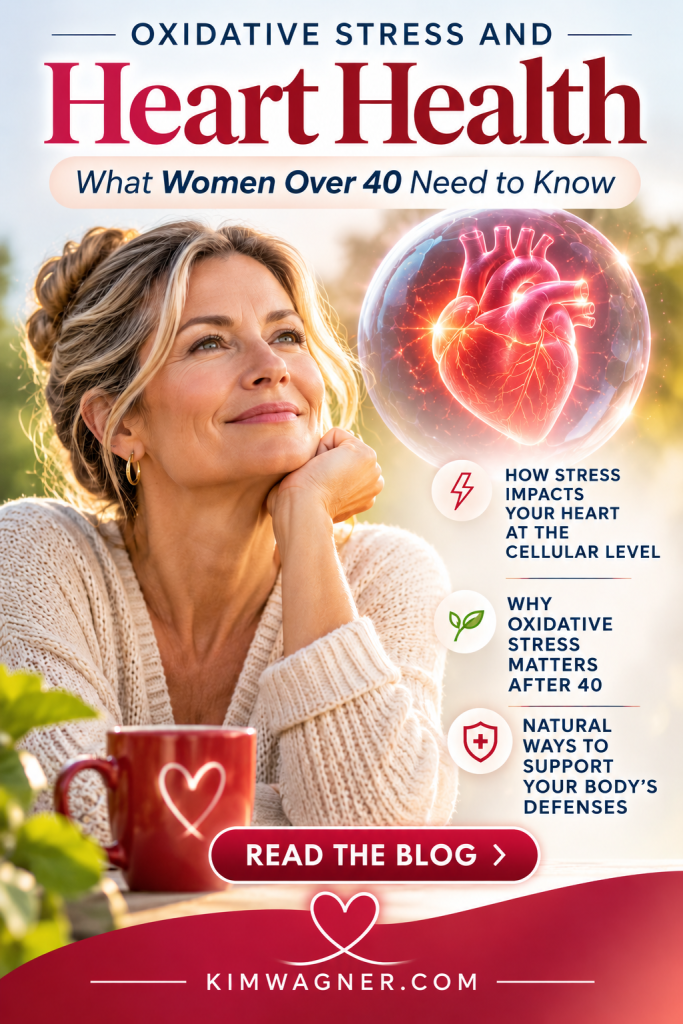
Oxidative Stress and Heart Health: What Women Over 40 Need to Know

Heart Health Month is full of pink hearts and kale recipes. Lovely. But hardly anyone is talking about what’s happening inside your cells.

If you’re a busy woman over 40 running on coffee and adrenaline, this one’s for you. (Yes, you. The one who looked after everyone else this week and put herself last. Again.)

Because stress doesn’t just wear you out. It can wear on your body right down to the cellular level, and your heart sits right in the middle of it. If you’re running on empty and not sure why, start with Tired But Wired: The Signs of Burnout Rest Can’t Fix.

So let’s look at one piece of the puzzle that rarely makes it into the wear-red posts: oxidative stress. Never heard of Oxidative Stress before? (don’t worry, I hadn’t until 5 years ago) start with What is Oxidative Stress? A Simple Guide for Women Over 40

And if you’d like to jump straight to supporting your body’s own defenses, here’s the 100% natural activator built on 25+ years of science: 

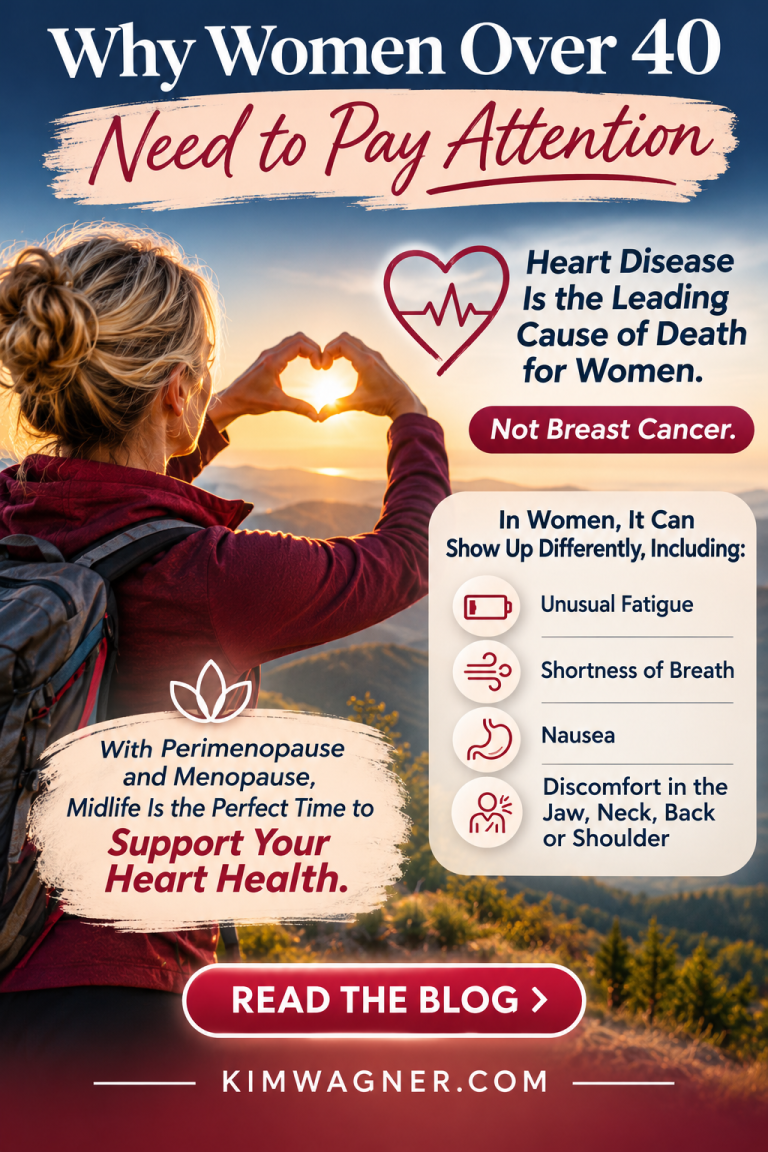
Why Women Over 40 Need to Pay Attention

Heart disease is the leading cause of death for women. Not breast cancer. Heart disease. Most of us have no idea.

And it doesn’t always look like the clutching-your-chest scene in the movies. In women, it can show up as unusual fatigue, shortness of breath, nausea, or discomfort in the jaw, neck, back or shoulder. (Easy to brush off when you’re busy and tired anyway, right?)

For my women who are 40+, add perimenopause and menopause, when hormones are shifting, and midlife is the perfect time to start looking after your heart properly. If something feels off, get it checked. Please don’t wait.

So, What Is Oxidative Stress?

Think of a cut apple left on the bench. It goes brown. Or a bike left out in the rain. It goes rusty. That’s oxidation.

Your body does a version of this every single day. As your cells make energy, they produce unstable molecules called free radicals. A certain amount is completely normal and even useful. Your body also has its own antioxidant defenses to keep things in balance.

Oxidative stress is what happens when the load is bigger than your defenses can handle. Too many free radicals, not enough backup.

Want the full plain English version? Here’s the simple guide

How Oxidative Stress and Your Heart Are Connected

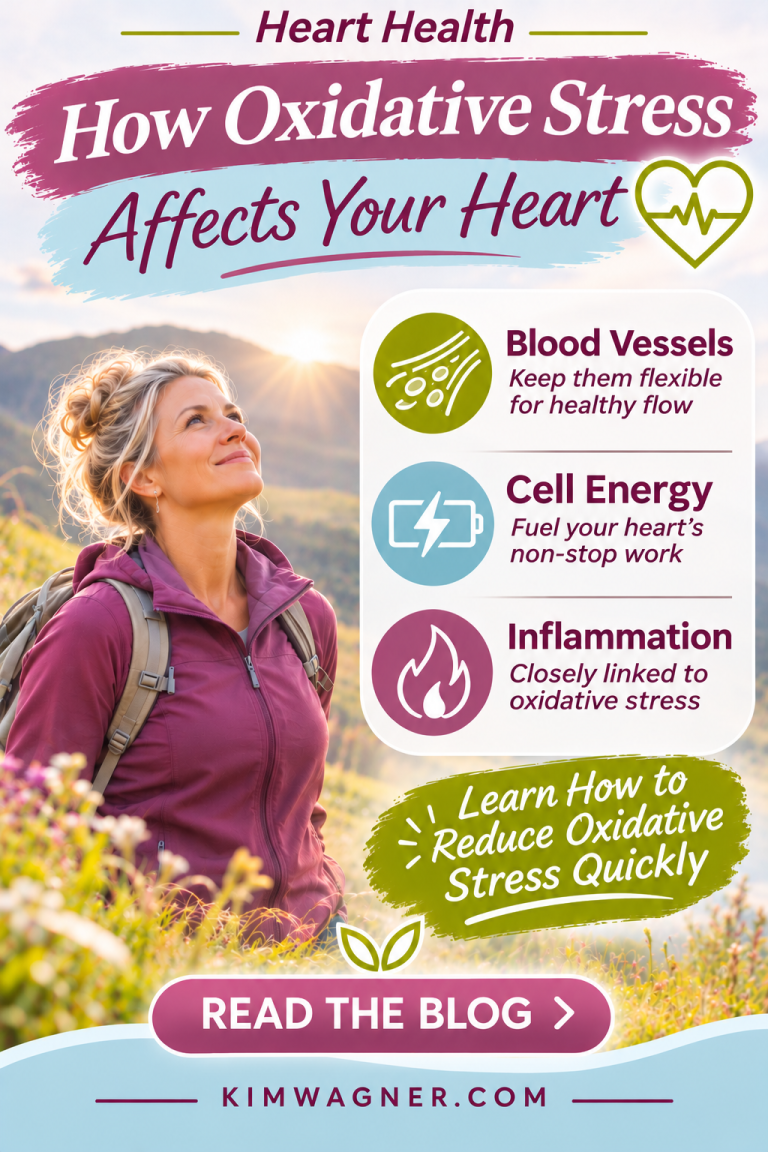
You don’t need a science degree for this bit. Researchers are looking at how oxidative stress connects with a few things that matter for your heart:

  • Your blood vessels, which need to stay flexible so blood can flow easily
  • Your cells’ energy, because your heart is a muscle that never gets a day off .  I take this to help cellular health
  • Inflammation, which is closely linked to oxidative stress (the two tend to feed each other)

This is one pathway among many, and heart health is never down to one thing. But it’s a pathway you can actually do something about. That’s the good news.

Wired and tired? Grab my free 5-Minute Cortisol Reset and calm your system down in five minutes.

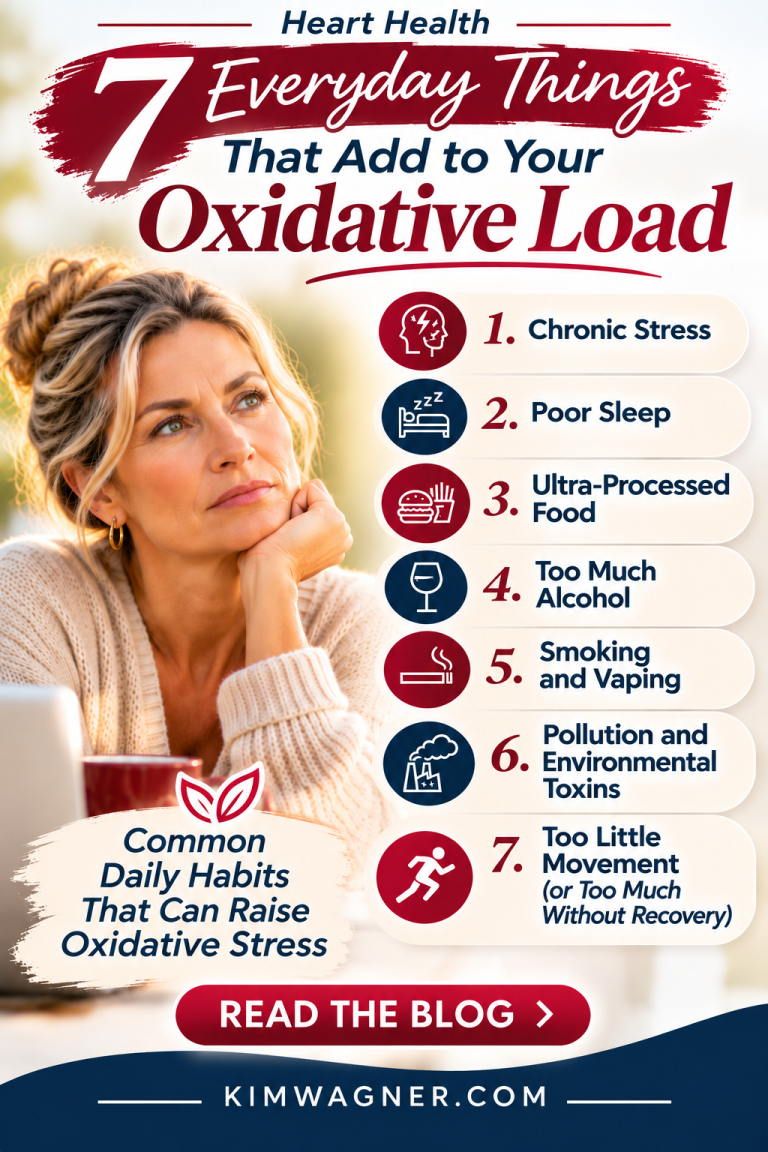
7 Everyday Things That Add to Your Oxidative Load

Every single one of us deals with some oxidative stress. The world we live in today is busy, chaotic and full of stress from every direction, 24/7. This is about knowing where to focus so you can bring your levels down.

  1. Chronic stress. Research links long-term stress to higher oxidative stress, and busy women are experts at this one. There are absolutely ways to bring those levels down, and my free 5-Minute Cortisol Reset is a great place to start. 
  2. Poor sleep. Sleep is repair time for your body. The majority of women 40+ that I’ve worked with are tired but wired. They are absolutely knackered, but the moment their head hits the pillow, BAM, wide awake again. I wrote a whole post on this one: Wide Awake at 3am? The Evening Wind-Down for Burned Out Women
  3. Ultra-processed food. Think packets, boxes and anything with a very long ingredient list. And honestly, most of the convenience food these days contributes to health issues.
  4. Too much alcohol, particularly at night time. The body needs to focus on the toxic load that alcohol carries, and that alone increases oxidative stress.
  5. Smoking and vaping. Cigarette smoke is packed with chemicals that flood your body with free radicals, and vaping isn’t the harmless swap it’s made out to be. And of course, second hand smoke counts too. If you live or spend a lot of time with a smoker, you’re carrying some of that load as well.
  6. Pollution and environmental toxins. Between our air quality, the chemicals in our food and drink, and what we put on our skin, our bodies are dealing with a lot. This is an area we can improve really quickly!
  7. Too little movement (or, for the over-achievers among us, too much intense exercise with no recovery). If you’re new to exercise, start with a 10 minute walk. And if you want to work on bone density, resistance training and even jumping can be helpful.


See how many of those are about modern, busy, running-on-empty life? That’s not a coincidence.

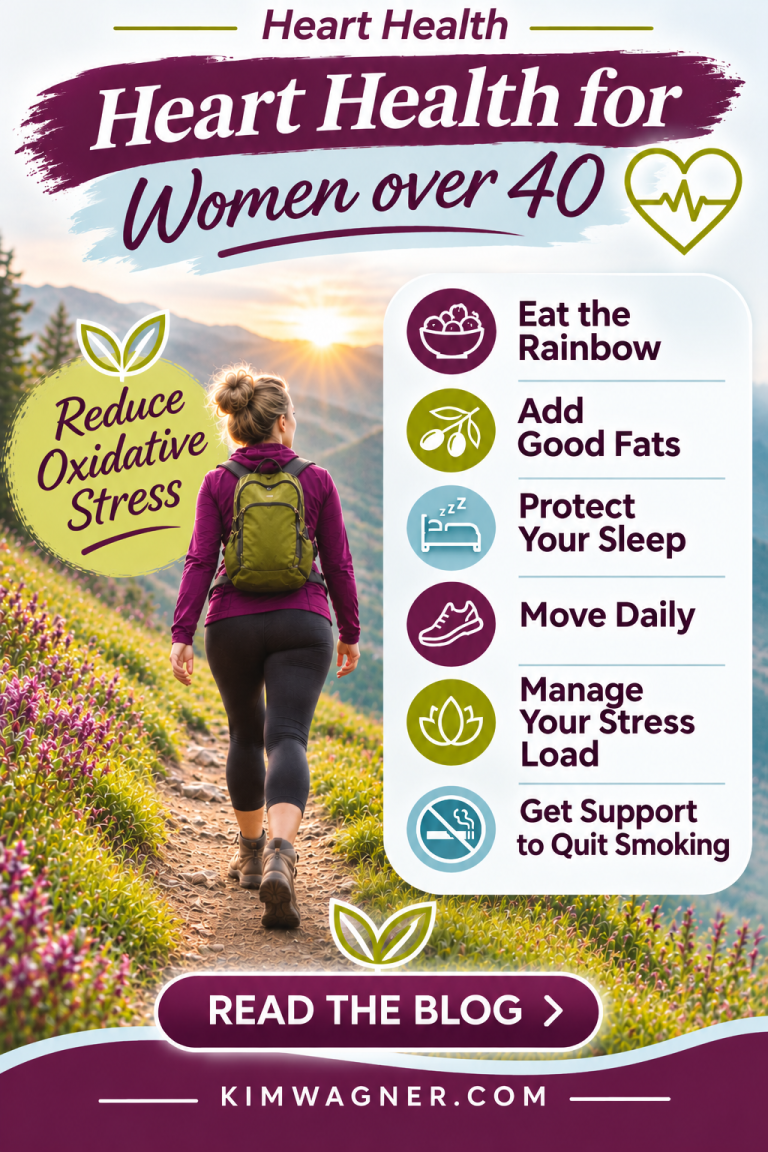
What Actually Helps (Food and Lifestyle First)

Let’s start with the foundations of health. They are the best way to move forward and will support your body the most:

  • Eat the rainbow. Berries, leafy greens, peppers (capsicum), beetroot, tomatoes, legumes. A Mediterranean-style way of eating is the pattern most often recommended for heart health. Here’s a diet guide that will help.
  • Add good fats. Olive oil, nuts, seeds and omega-3 rich foods.
  • Protect your sleep. A wind-down routine is worth its weight in gold. Sleep in a dark room, make sure it’s cool enough, no screens in bed. I shared my favorite ways to help here. 
  • Move daily. Walking counts. So does dancing around the kitchen. And start to incorporate some resistance training if you are able. 
  • Manage your stress load, not just your stress symptoms. Start to set healthy boundaries (No is a complete sentence!) and see what you can delegate or remove from your to-do list entirely. Check out my Boundaries ebook.
  • If you smoke, ask your GP for support to stop.


Want to know where to start?  Here my Free 7 Foods to Reduce Inflammation guide

Meet Your Body’s Built-In Defense System

Here’s the bit I find fascinating.

Your body isn’t helpless against oxidative stress. Inside your cells is a pathway called NRF2, which acts like a switch that turns on your body’s own antioxidant defenses.  

It’s a pretty clever design. Instead of you having to keep feeding your body antioxidants from the outside, NRF2 helps your cells make their own. The catch is that this system tends to become less responsive as we get older, and chronic stress doesn’t help.

That’s where a 100% natural activator built on 25+ years of science comes in. It’s designed to support your body’s own NRF2 pathway, working alongside the food, sleep, movement and stress basics, not instead of them.

Learn more about the NRF2 activator I’ve been using for over 5 years.

Here are a few other things I take: Liquid Collagen, NAD  

There’s a lot of info!  So feel free to reach out and we can discuss the right fit for you – there are plenty of stacks that will save you money.

The Part Nobody Talks About: Your Beliefs

Here’s what I see over and over with the women I work with.

They know what to do. Eat better, sleep more, slow down. And they still can’t seem to do it. Why?

Because underneath, there’s often a belief running the show. Things like rest is lazy. Everyone else comes first. I have to earn my downtime. I’m only worth what I produce.

Those beliefs live in the subconscious, and they keep your stress response switched on, day after day. You can’t just think your way out of them (believe me, I tried).

That’s why I use PSYCH-K, a simple, gentle way to find and change those subconscious beliefs so your body can finally relax into the changes you’re making.

Find out how PSYCH-K can help you change the beliefs keeping you stuck.

Not sure if it’s for you? Book a free 15-minute call and ask me anything.

Your 7-Day Heart Starter

Don’t try to do it all. Pick two or three and start there.

  1. Add one extra color to every dinner plate. Free 7 Foods to Reduce Inflammation guide
  2. Walk for 10 minutes after a meal.
  3. Write down tomorrow’s to-do list before bed so your brain can switch off.
  4. Try five slow breaths when you feel your engine revving. Free 5-Minute Cortisol Reset
  5. Say no to one thing that drains you. Boundaries ebook
  6. Book that check-up you’ve been putting off.
  7. Notice one belief that’s driving your busy-ness. Just notice it. Ever heard of PSYCH-K ?

Where to Start

Be kind to yourself. Seriously. You didn’t get here overnight, and you won’t turn it around overnight.

Stop and listen to your body. We’re all different, and what works for me may not be the right fit for you. Start with the small, doable things and build from there.

Want to keep going? Here’s where to head next:

If this resonated, know it doesn’t have to stay this way. I work with high-achieving women who are done running on empty and ready to optimize their health, feel like a million bucks, and actually thrive, not just get by. Get in touch here and let’s talk, no pressure, just a real conversation about what’s going on for you.

Until next time, 

Kim Wagner is a certified Self Care Coach, IIN Health Coach, Menopause Coach, PSYCH-K® Preferred Facilitator, and Amazon bestselling author.

This post is for educational and informational purposes only and is not intended as medical advice. I’m not a doctor, and nothing here should replace a conversation with your GP or qualified healthcare provider, especially if you have a diagnosed condition or are taking medication. Always check with a professional before making changes to your diet, supplements, or health routine.

Some of the links in this article are affiliate links. That means if you choose to purchase through my link, I may earn a small commission at no extra cost to you. I only share products and programs I personally use, love, or believe will genuinely help your family thrive.