Perimenopause or Burnout? How to Tell (Plot Twist: It’s Often Both)
Tired all the time. Brain running on overdrive. Wide awake at 3am. Snapping over the milk being left out. Feeling flat, wired, and not quite yourself.
So which is it? Perimenopause? Burnout? Or are you just “getting older and busy”?
Plot twist: it could be either, and quite often it’s both. And honestly, the two look so alike that a lot of women get stuck guessing for years.
Let’s untangle it.
Honestly, I see this so often with my clients. And I went through it myself at 49. By the time we are in our mid to late 40s, it’s all piling up and often there’s so much chaos, so many symptoms and so much to deal with that we can’t easily work it out.
Want a quick reset while you read? Grab my Cortisol Reset guide.
Years of running on empty put real stress on your body, including at the cellular level. That’s why supporting my body became part of my reset, starting with a 100% natural activator backed by more science than you can poke a stick at.
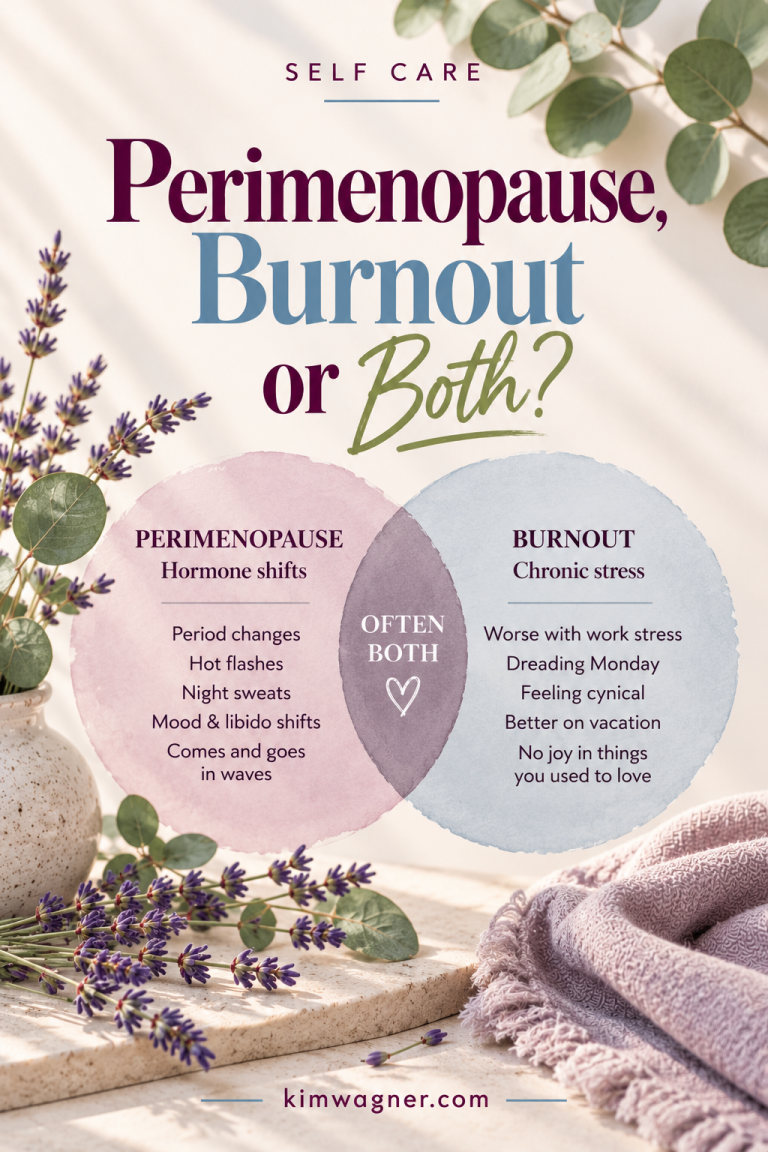
Clues that point toward perimenopause
Perimenopause is the lead-up to menopause, when your hormones start shifting. These signs are more specific to it:
Changes in your periods (shorter, longer, heavier, lighter, or less predictable)
Hot flashes or night sweats
Waking in the night feeling hot
Changes in your mood or libido that seem to follow your cycle
Symptoms that come and go in waves
Clues that point toward burnout
Burnout comes from carrying too much for too long. These signs lean that way:
Symptoms that are worse around work or high-pressure periods
Dreading Monday, and the Sunday afternoon anxiety
Feeling cynical or detached from things you used to care about
A little better on vacation, then straight back down within days
No joy in the things you used to enjoy
Why it’s often both
Here’s the bit most people miss. Chronic stress and hormone shifts can feed each other.
When you’re burned out, your body is already running on high alert. Add the hormone changes of perimenopause, and sleep gets worse, mood gets wobblier and the brain fog gets thicker. And when you’re sleeping badly and feeling foggy, everything feels harder, which adds more stress.
So the question isn’t always “which one is it?” It’s “what does my body need support with right now?”
Want help getting to the bottom of it? My Self Care: The Freedom Project helps you settle your nervous system and look after yourself while your body goes through changes, without adding more to your to-do list.
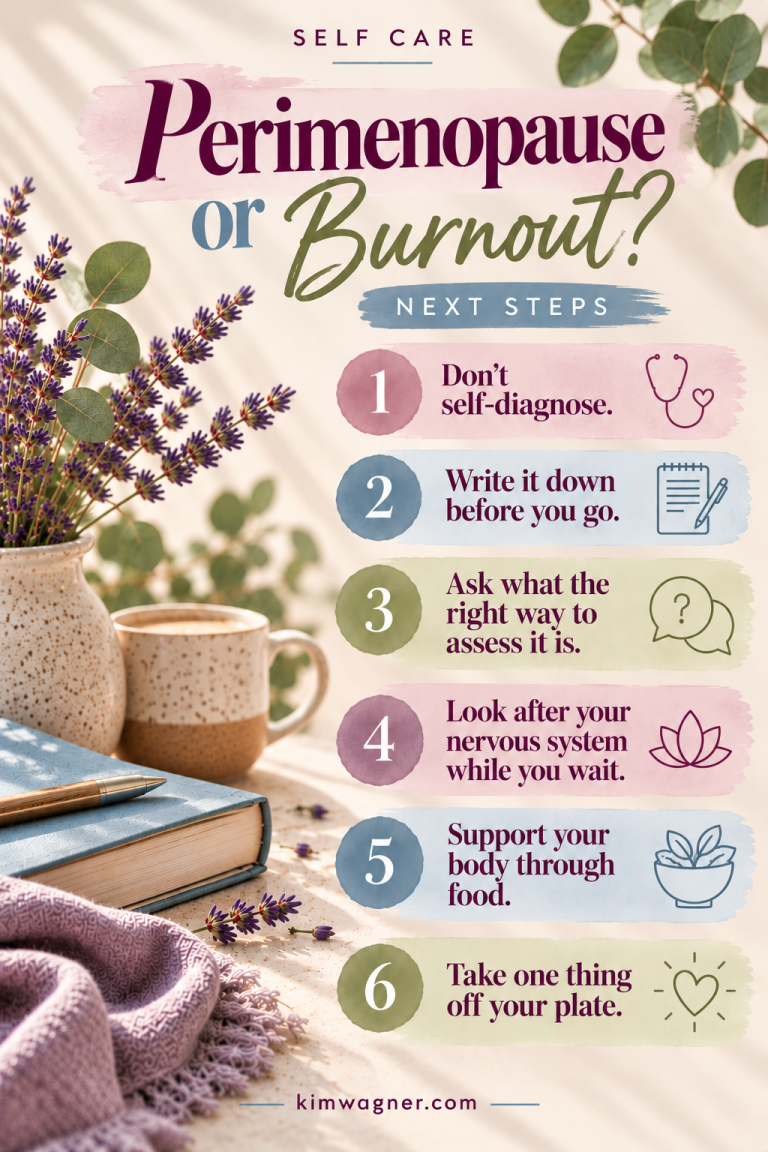
What to do next
Don’t self-diagnose. I’m not a doctor, and I can’t tell you which one you’ve got. Neither can Google. Your GP can look at your symptoms, your age, your cycle and your overall health, and work out what’s going on.
Write it down before you go. Jot down your symptoms, when they happen, how your sleep is, and what’s changing with your periods. It makes the appointment far more useful.
Ask what the right way to assess it is. Don’t assume a single test will give you the full answer. Ask your doctor what makes sense for you.
Take one thing off your plate. Burnout and perimenopause both get worse when you’re carrying everything. Remove one commitment this week. Just one.
If your mood is very low, or you’re struggling to cope, please talk to your GP or someone you trust. Don’t wait it out.
The belief that keeps you stuck
For a lot of the high-achieving women I work with, it’s a belief running in the background:
I should be able to push through this.
If I slow down, I’m failing.
This is just who I am now.
Those beliefs live in the subconscious, so they keep you pushing when your body is asking for something different. That’s the work I do with PSYCH-K: finding and updating those old beliefs so you can look after yourself without the guilt.
The bottom line
You’re not broken, and you’re not going mad. Your body might be going through a change, carrying a lot of stress, or doing both at once, and either way, it needs support, not a pep talk.
Rest and routine matter, but your body also needs backup while it comes back into balance. For me, that meant pairing rest with a 100% natural activator.
If this resonated, it doesn’t have to stay this way. I work with high-achieving women who are done running on empty and ready to optimize their health, feel like a million bucks, and actually thrive, not just get by. Explore the Self Care Program or Get in touch here and let’s have a real conversation about what’s going on for you.
Until next time,
Kim Wagner is a certified Self Care Coach, IIN Health Coach, Menopause Coach, PSYCH-K® Preferred Facilitator, and Amazon bestselling author.
This post is for educational and informational purposes only and is not intended as medical advice. I’m not a doctor, and nothing here should replace a conversation with your GP or qualified healthcare provider, especially if you have a diagnosed condition or are taking medication. Always check with a professional before making changes to your diet, supplements, or health routine.
Some of the links in this article are affiliate links. That means if you choose to purchase through my link, I may earn a small commission at no extra cost to you. I only share products and programs I personally use, love, or believe will genuinely help you thrive.