How to Say No Without Feeling Guilty (and Skip the Guilt Spiral)

No.

That’s a full sentence. So why does it feel so hard to say?

If you’re a people pleaser, the word “no” is probably the most difficult word to say. You say yes to the extra project, the favor, the school fundraiser, the “quick coffee” that takes two hours. Then you spend the next week wondering how you ended up with so much on your plate and why you’re exhausted.

I know, because I was that person. As a people pleaser, I would push myself to the limit to get the work done, and I was rewarded with more work. I was so proud of how much I could cope with. Yep, I know. Absolutely a toxic trait.

If that’s you, there is an easy solution.

And if you want the shortcut, my Boundaries ebook walks you through it, step by step.

Tired of saying yes to everything? Grab my free Cortisol Reset for a quick way to calm things down when the guilt kicks in.

Saying yes to everything has a cost, and your body and mind pay it. Years of running on empty put real stress on your body, including at the cellular level. That’s why supporting my body became part of my reset, starting with a 100% natural activator backed by more science than you can poke a stick at. 

Why saying no feels so hard

It’s not because you’re weak or bad at boundaries. It’s because somewhere along the way, you learned that:

  • Being helpful means being good.
  • Saying no will let people down.
  • If you don’t do it, nobody will, and everything will fall apart.
  • Being reliable is how you earn respect.
  • As a woman, going the extra mile can be required so you are considered equal

Those beliefs run quietly in the background. (I go deeper on this in Why Do I Keep Burning Out? The Subconscious Beliefs Behind It.) So when someone asks, you say yes before you’ve even thought about it.

And the more you do, the more people expect. You become the go-to person. The one who always copes. Which makes it even harder to say no next time.

The guilt spiral

Here’s how it usually goes:

  1. You say no (or think about saying no).
  2. You feel guilty.
  3. You say yes to make the guilt go away.
  4. You get resentful and exhausted.
  5. You wonder why you’re so tired, and the loop starts again.

The guilt doesn’t mean you’ve done something wrong. It’s a habit. It’s old programming telling you that putting yourself first is selfish and letting other people down is bad. (Old programming is exactly what I work on with PSYCH-K.) And it fades faster than you think, especially once you stop feeding it and only say yes to things in your best interest.

How saying yes to everything leads to burnout

Every yes costs you something: time, energy, sleep, headspace. When you say yes to everything, you’re taking from yourself, and eventually you are running on empty.

Here’s how it builds:

  • You take on more than you can handle, so you run on adrenaline and caffeine to keep up.
  • You never get time to rest, so your body never comes down.
  • You get resentful, snappy and flat, because there’s nothing left for you.
  • You still can’t say no, because you feel stuck in this non-stop loop and don’t know how to start saying no.

That’s the road to burnout, and boundaries are one of the ways off it. (If you’re not sure whether you’re already there, grab my free guide, 7 Signs You’re in Burnout, or read High-Functioning Burnout: The Quiet Burnout Nobody Notices in High Achievers.)

7 ways to say no (that don’t sound rude)

You don’t need a long explanation. Here are some lines you can use:

  1. “I can’t take that on right now.” Short, honest and polite.
  2. “Let me check my diary and come back to you.” This buys you time to think before you answer.
  3. “That doesn’t work for me, but here’s what I can do.” Offer a smaller option if you want to.
  4. “I’m at capacity at the moment.” At work, this one is gold.
  5. “No, thank you.” Yes, really. It’s a complete sentence.
  6. “I’d love to, but I can’t.” Warm and clear.
  7. “I’m not the right person for this, but I’ll point you to someone who is.” Helpful, without you doing it.

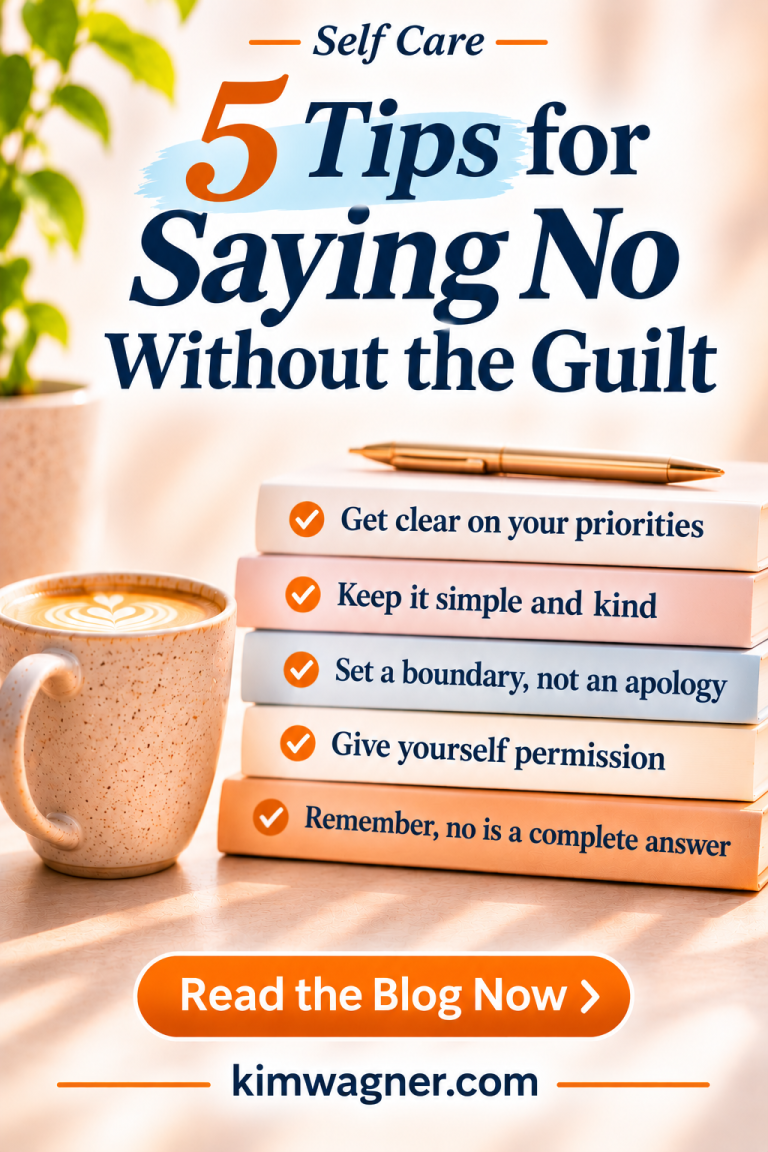
5 tips for saying no without the guilt

We’re all different, so treat these as starting points, not set in stone.

1. Pause before you answer

You don’t have to say yes on the spot. “Let me get back to you” is always allowed.

2. Skip the long explanation

The more you explain, the more you invite a debate. A short, kind “no” is enough.

3. Start small

Practice on something low-stakes first. Say no to the extra committee, the optional meeting, the third coffee catch-up. Build the muscle.

4. Expect the guilt, and do it anyway

It will show up. That’s okay. You can feel guilty and still be right. (I promise, it gets easier over time and the guilt fades.)

5. Ask yourself one question

“If I say yes, what am I saying no to?” Often it’s your sleep, your happiness, your family or your sanity.

Want help with this? My Boundaries ebook walks you through exactly how to set boundaries, say no and handle the guilt, step by step. 

The subconscious beliefs behind people pleasing

If you’ve tried all of this and you still can’t say no, it’s not a lack of effort. It’s usually a subconscious belief, running in the background, like:

  • “I’m only worth what I do for others.”
  • “If I say no, I’m letting people down.”
  • “Putting myself first is selfish.”

You can’t just think your way out of beliefs like these, because they sit below your conscious mind. You can know you should say no, and still say yes every time.

That’s the work I do with PSYCH-K. It’s a way of working with the subconscious mind to find the old beliefs that keep you saying yes when you want to say no, and update them, so saying no starts to feel natural instead of like a fight. As a PSYCH-K® Preferred Facilitator, this is how I work: at the subconscious level, not just with surface-level advice. See how PSYCH-K works

Not sure if it’s for you? Book a free 15-minute call and we’ll talk it through.

And if saying no is only part of it, and you want to start looking after yourself properly, my Self Care: The Freedom Project walks you through resetting your body and your mindset step by step.

How to start this week

  1. Pick one small thing you’d normally say yes to.
  2. Say no, or “let me get back to you.”
  3. Notice the guilt and let it pass.
  4. If you keep saying yes even though you know better, that’s your sign to look at the belief underneath. PSYCH-K is where I’d start.

That’s it. You’re not being selfish. You’re protecting the energy you need to show up for the things that matter.

Want scripts for every situation, at work, at home and with friends? That’s inside my Boundaries ebook.

Need ideas for what to do with the time you get back? Try 10 Simple Self Care Ideas for Busy Women.

If your tiredness, 3am wake-ups and brain fog feel like more than saying yes too much, read Perimenopause or Burnout? How to Tell. It’s often both.

The bottom line

You’re allowed to say no. You’re allowed to rest. You’re allowed to be happy. You’re allowed to put yourself on the list.

If any of this sounded like you, you’re not broken. You’re burned out. Big difference. And it doesn’t have to stay this way.

Rest and routine matter, but your body also needs support while it comes back into balance. For me, that meant pairing rest with that same 100% natural activator. 

I help high-achieving women over 40 recover from burnout, get their energy back and feel like themselves again. Book a free 15-minute call and let’s have a real conversation about what’s going on for you. No pressure.

Not ready for a call? Start with my free Cortisol Reset.

Until next time,

Kim Wagner is a certified Self Care Coach, IIN Health Coach, Menopause Coach, PSYCH-K® Preferred Facilitator, and Amazon bestselling author.

This post is for educational and informational purposes only and is not intended as medical advice. I’m not a doctor, and nothing here should replace a conversation with your GP or qualified healthcare provider, especially if you have a diagnosed condition or are taking medication. Always check with a professional before making changes to your diet, supplements, or health routine.

Some of the links in this article are affiliate links. That means if you choose to purchase through my link, I may earn a small commission at no extra cost to you. I only share products and programs I personally use, love, or believe will genuinely help you thrive.