How to Calm the Nervous System When You Can't Switch Off

Ever been so tired you couldn’t sleep?

Knackered all day, then wide awake the second your head hits the pillow. Brain running the to-do list at 3am. Doom scrolling in bed because you can’t switch off.

I used to think that meant something was wrong with me. After 30 years in corporate finance, running on fumes and being proud of how much I could cope with, I’d have said I was just “bad at relaxing.”

Turns out I was completely wrong – the issue was my nervous system. Way too many years of pushing myself so hard that my nervous system was a wreck.

So if you’re searching for how to calm the nervous system when you can’t switch off, you’re in the right place. Here’s what’s going on, and what actually helps.

New here? Start with Tired But Wired: The Signs of Burnout Rest Can’t Fix and Bubble Baths Won’t Fix Burnout, then come back. This is the missing piece.

Want a quick reset you can do today? Grab my Cortisol Reset guide.

What’s actually going on in your body

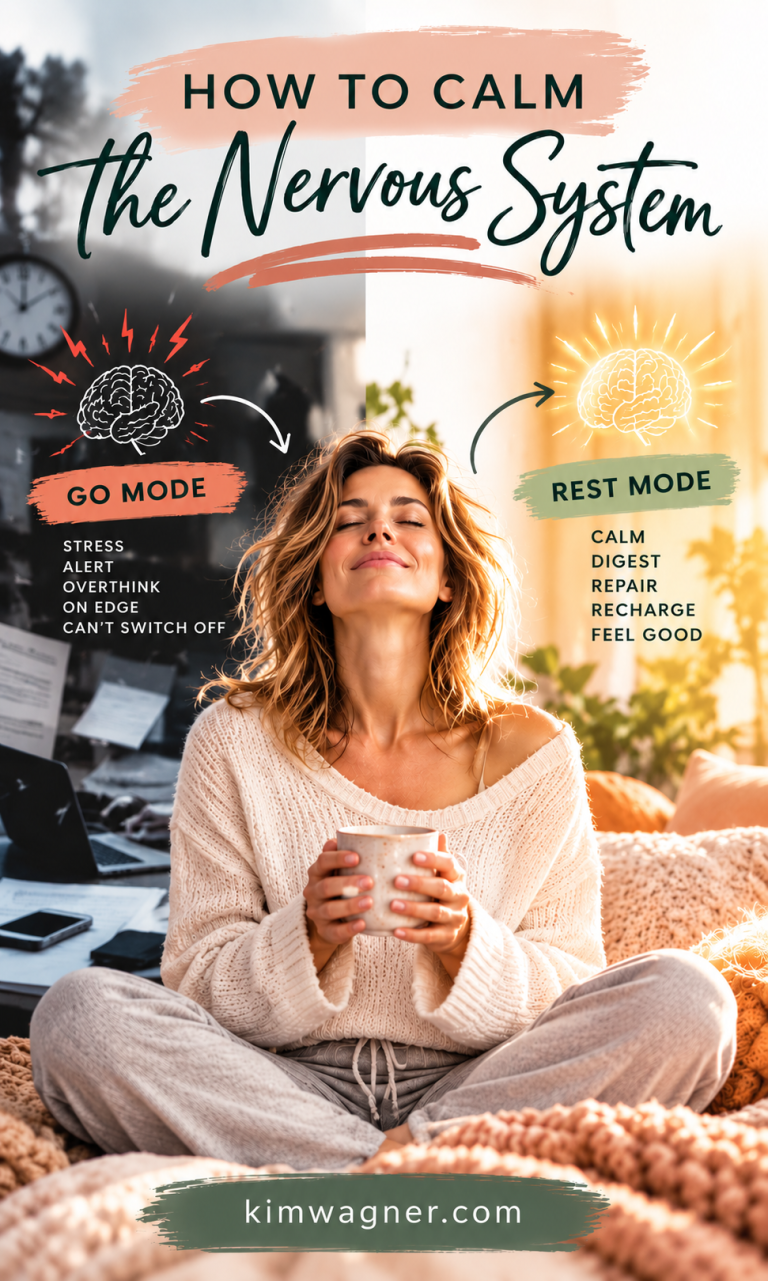
Your nervous system has two main gears.

Go mode. This is your fight or flight response. It’s built for emergencies: deadlines, danger, the lot. Your body ramps up, stays alert and puts everything else on hold.

Rest mode. This is where your body slows down, digests, repairs and winds down. It’s meant to be where you spend a good chunk of your day.

When you’ve spent months or years pushing through, your body forgets how to switch gears. It stays in go mode, even when you’re finally sitting on the couch and the emergency is long gone. Your stress response never got the memo that it’s over.

This is not something you’ve consciously done. You’ve just been “on” for a very long time.

Burnout isn’t just in your head either, this shit is real. Years of running on empty puts real stress on your body, including at the cellular level. That’s why supporting my body became part of my reset, starting with a 100% natural activator backed by more science than you can poke a stick at. 

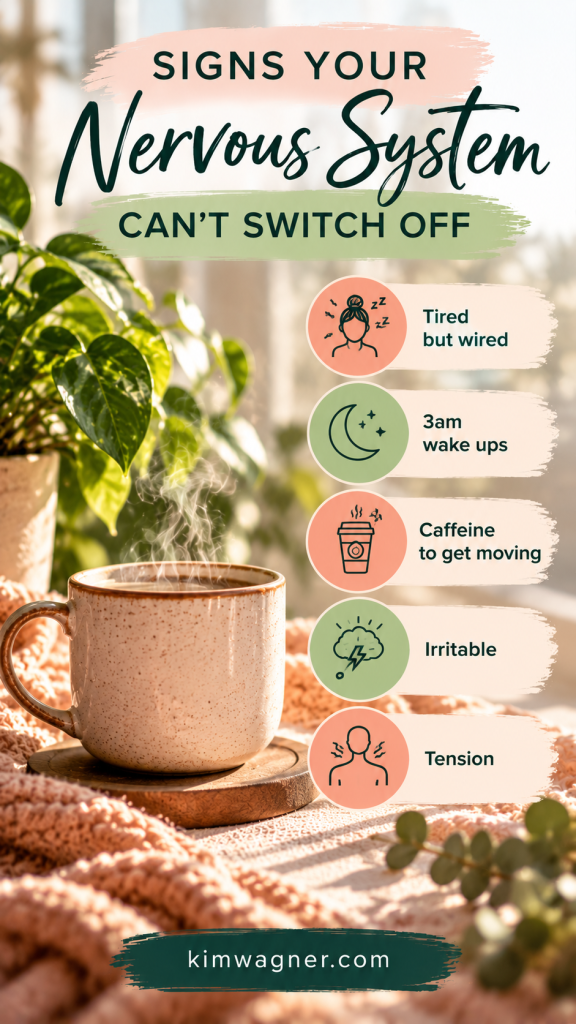
Signs your nervous system can’t switch off

  • You’re tired but wired, wiped out all day and wide awake at night
  • You wake at 3am with your mind racing
  • You need caffeine to get going and have a hard time settling at the end of the day
  • You snap over the tiniest thing (the milk, again)
  • Your shoulders live around your ears and you clench your jaw without noticing
  • You can’t relax even when you finally stop, and you feel guilty if you do
  • You feel “off” the moment the weekend starts and out of control by Monday

Nodded at a few? Your body isn’t broken. It’s asking for a different kind of help.

Why you can’t think your way out of it

Here’s the annoying bit. You can’t just decide your nervous system is calm and it happens. Telling yourself to “just relax” is about as useful as telling a smoke alarm to calm down.

Your body responds to signals of safety, not to a pep talk. So the goal isn’t to try harder. It’s to send your body the message, over and over, in small ways, that the emergency is over.

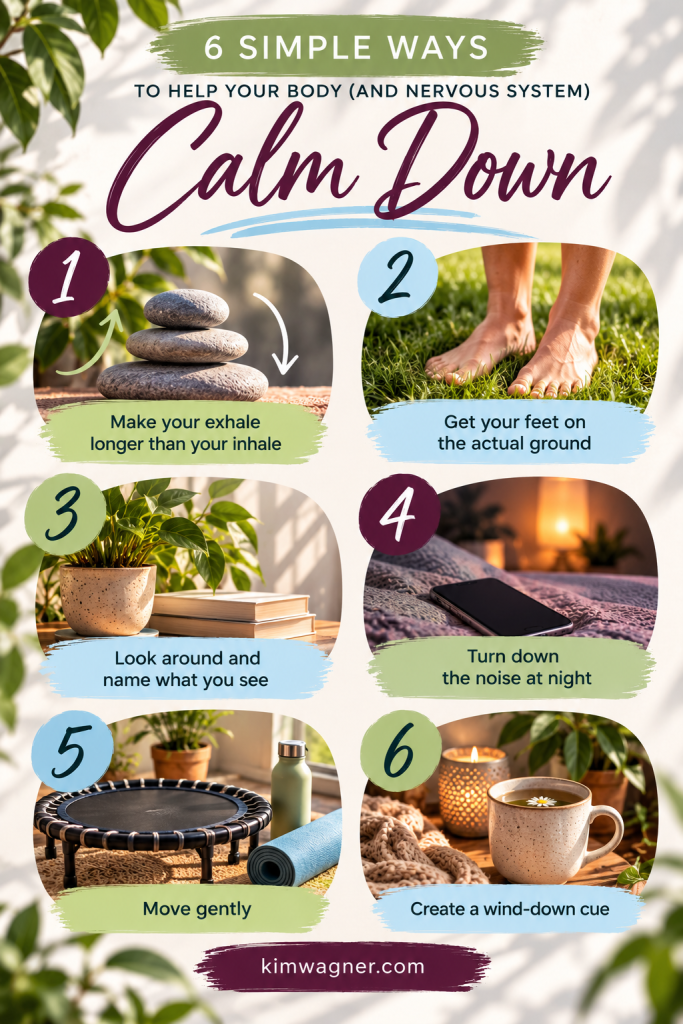
6 simple ways to help your body (and nervous system) calm down

Remember, we’re all different, so treat these as starting points, not set in stone.

1. Make your exhale longer than your inhale

Breathe in through your nose for a count of four, then out slowly for six or eight. Do it for a couple of minutes. A longer exhale is one of the simplest ways to nudge your body toward rest mode.

2. Get your feet on the actual ground

Take your shoes off and stand on grass, sand or soil for a few minutes. No phone. Feel the ground under you and let your eyes wander. It’s free, it takes two minutes and it pulls you out of your head and into your body. Personally I use this grounding mat under my desk and it’s amazing!

3. Look around and name what you see

Slowly look around the room and name five things you can see. It sounds silly, and it works. It tells your brain you’re safe, right now, in this room.

4. Turn down the noise at night

Doom scrolling, late caffeine and bright screens all keep your body on alert. Pick one to dial back this week.

5. Move gently

You don’t have to punish yourself at the gym. A walk, a stretch, some Qigong or shaking your arms and legs out for a minute can help your body release stored up tension. I’ve got this amazing rebounder and just 1 minute helps to calm my nervous system.

6. Create a wind-down cue

Same time, same small ritual every night: dim the lights, make a herbal tea, put the phone in another room. Your nervous system loves predictability. After a few nights, the cue itself starts telling your body it’s time to settle.

Want the shortcut? Inside my Self Care: The Freedom Project program, I walk you through resetting your body and your mindset step by step, without adding more to your to-do list. 

The part most people miss

You can do every one of those things and still find yourself back on high alert a week later. That’s because there’s often something underneath keeping your body in go mode.

For a lot of the high-achieving women I work with, it’s a belief running in the background:

  • If I relax, something will go wrong.
  • I’m only safe when I’m busy.
  • Rest is for people who’ve earned it.

Those beliefs live in the subconscious, so your body keeps behaving as if the emergency is still on. You can breathe, ground and wind down all you like, but if some part of you believes slowing down isn’t safe, your nervous system will keep reaching for the alarm.

That’s the work I do with PSYCH-K : finding and updating those old beliefs so your body can finally stand down for good.

One more thing: if you ever have a racing heart, chest pain, panic attacks or anxiety that’s getting in the way of daily life, please check in with your GP. Nothing here replaces that.

The bottom line

Your nervous system isn’t the enemy. It’s been doing its job, protecting you, for far longer than it should have had to.

Send it small signals of safety, be patient with yourself, and deal with what’s sitting underneath. That’s how you stop surviving on high alert and start feeling like yourself again.

If this resonated, it doesn’t have to stay this way. I work with high-achieving women who are done running on empty and ready to optimize their health, feel like a million bucks, and actually thrive, not just get by. Explore the Self Care Program or Get in touch here and let’s have a real conversation about what’s going on for you.

Until next time,

Kim Wagner is a certified Self Care Coach, IIN Health Coach, Menopause Coach, PSYCH-K® Preferred Facilitator, and Amazon bestselling author.

This post is for educational and informational purposes only and is not intended as medical advice. I’m not a doctor, and nothing here should replace a conversation with your GP or qualified healthcare provider, especially if you have a diagnosed condition or are taking medication. Always check with a professional before making changes to your diet, supplements, or health routine.

Some of the links in this article are affiliate links. That means if you choose to purchase through my link, I may earn a small commission at no extra cost to you. I only share products and programs I personally use, love, or believe will genuinely help you & your family thrive.